Back to Blogs

How Much Do Veneers Cost and Are They Worth It?

Porcelain veneers offer lasting smile transformations, balancing upfront veneers cost with durable cosmetic value.

November 9, 2026
•
5 min read
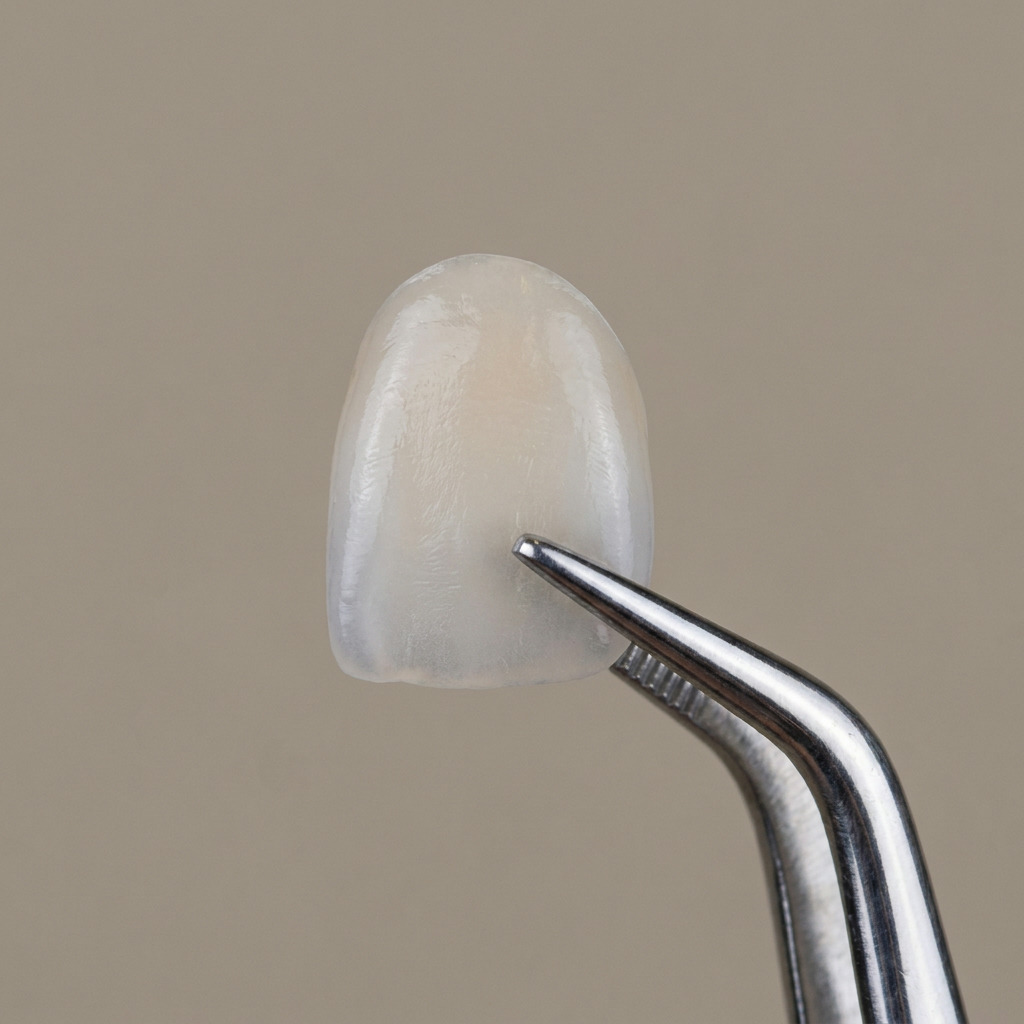
A translucent porcelain dental veneer is held with stainless steel tweezers against a neutral background.
Back to Blogs
A translucent porcelain dental veneer is held with stainless steel tweezers against a neutral background.

How Much Do Veneers Cost and Are They Worth It?

Porcelain veneers offer lasting smile transformations, balancing upfront veneers cost with durable cosmetic value.

November 9, 2026
•
5 min read

Veneers Cost and Overall Value Explained

Total veneers cost depends on the number of teeth treated, case complexity, preparation requirements, and custom dental laboratory fabrication. While cosmetic dental restorations require an upfront financial investment, many patients find high-quality veneers worth the expense due to their natural appearance, durable materials, and long-lasting stain resistance.

When evaluating the financial commitment of cosmetic dental enhancements, you must weigh short-term expenses against long-term benefits. Custom restorations address deep discoloration, minor chips, uneven spacing, and worn enamel simultaneously. Because they resist staining better than natural enamel, they can offer aesthetic stability that simpler surface treatments may not match.

At Muldoon Dental Arts, Dr. Chad Curtis evaluates each smile individually to recommend treatment paths that match personal goals and clinical needs. Understanding the structural, artistic, and technical components that influence final pricing allows you to make an informed decision for your smile.

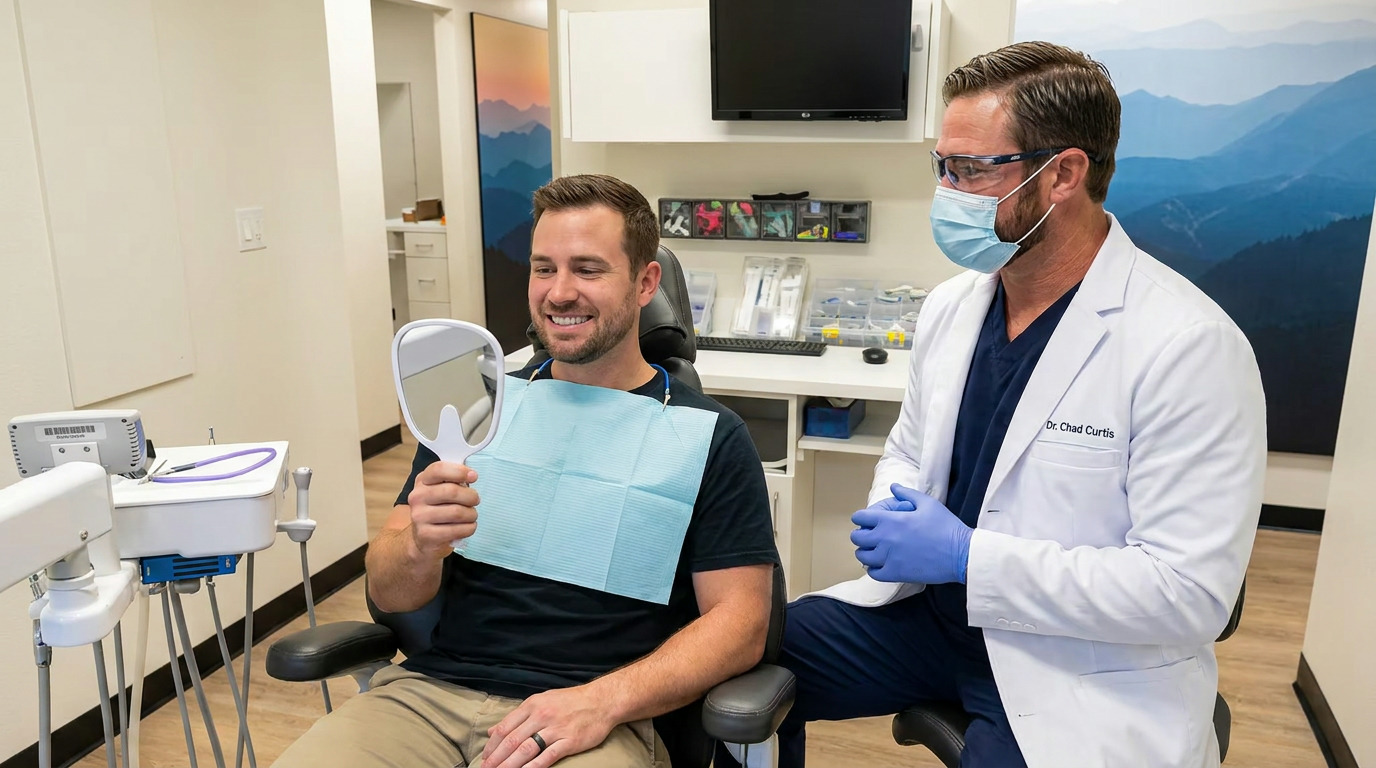
A smiling patient sits in a dental chair holding a handheld mirror to look at his smile while Dr. Chad Curtis, wearing a lab coat and mask, observes attentively.

What Factors Influence Dental Veneers Price?

A personalized dental veneers price is influenced by the total count of treated teeth, underlying oral health, the necessity of preparatory dental work, and dental laboratory craftsmanship. Geographic location and clinician experience also impact cost structures, meaning pricing reflects both technical precision and the premium materials chosen for your smile design.

Every smile design presents unique biological and mechanical conditions that dictate treatment planning. When planning care with Dr. Chad Curtis in Anchorage, our team examines your bite alignment and gum tissue health before finalizing your restorative plan. Addressing existing tooth decay or gum irritation prior to cosmetic placement creates a stable foundation for your investment.

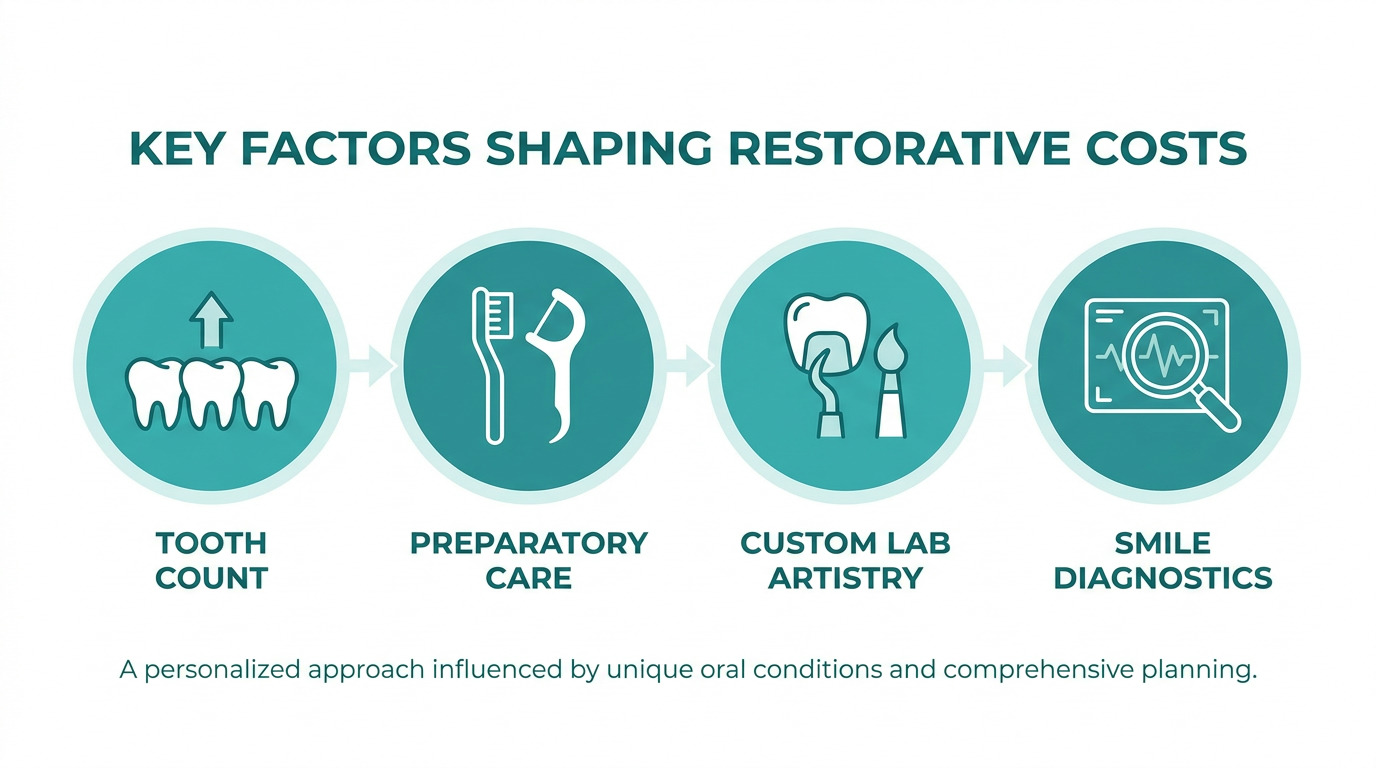
Key Factors Shaping Restorative Costs

  • Number of teeth involved: Treating a single discolored front tooth requires complex shade matching, whereas treating six to eight visible teeth across the smile zone creates comprehensive symmetry but requires more clinical time.
  • Preparatory treatments: Patients who need preliminary restorative care, such as Tooth Fillings or Periodontal Treatment, will see those therapies factored into their total treatment plan.
  • Custom laboratory artistry: Premium restorations rely on master ceramists who hand-layer shades, opacities, and surface textures to mimic lifelike light reflection.
  • Diagnostic wax-ups and imaging: Fabricating diagnostic mock-ups allows you to preview aesthetic adjustments before enamel preparation begins, enhancing clinical planning.
An infographic displays four teal icons for tooth count, preparatory care, custom lab artistry, and smile diagnostics outlining key factors shaping restorative costs.

Are Porcelain Veneers Worth the Investment?

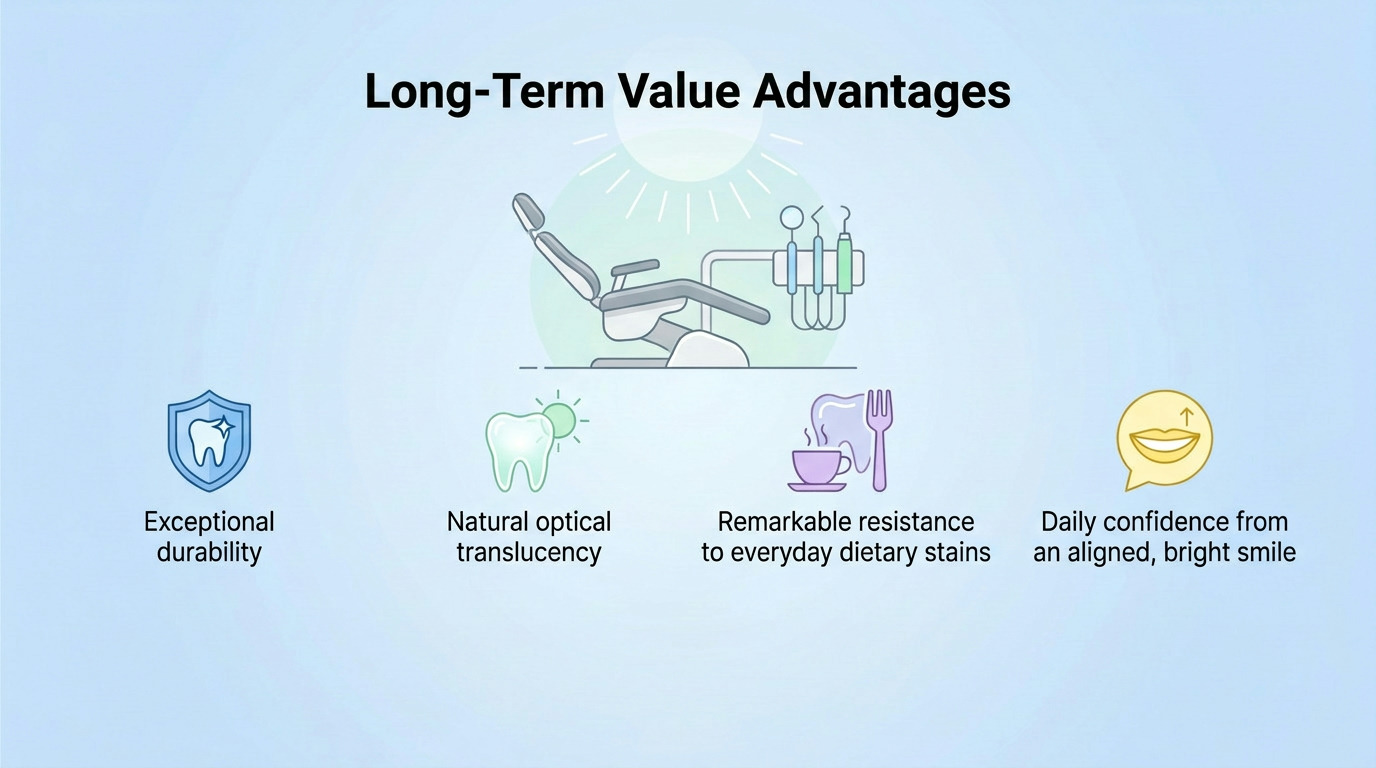
High-quality porcelain veneers are widely considered worth the investment because they offer exceptional durability, natural optical translucency, and remarkable resistance to everyday dietary stains. Unlike recurring whitening or bonding touch-ups, thin ceramic shells provide a durable, long-term smile transformation that bolsters personal and professional self-confidence.

Assessing value involves looking beyond initial expenses to the daily confidence gained from an aligned, bright smile. For many patients, addressing long-standing cosmetic concerns can make everyday social interactions feel more comfortable. Because high-grade dental ceramics mimic the light-handling properties of natural enamel, the visual result appears seamless rather than artificial.

Long-Term Value Advantages

  • Exceptional stain resistance: Ceramic materials resist discoloration from coffee, tea, and red wine far better than composite resins or natural enamel surfaces.
  • Structural reinforcement: Thin ceramic shells can protect worn, eroded facial enamel from further acid erosion and minor mechanical wear over extended periods.
  • Multi-issue correction: A single restorative procedure addresses minor crowding, gaps, surface pitting, and intrinsic stains simultaneously without extensive orthodontic timelines.
  • Straightforward daily maintenance: Caring for ceramic restorations relies mainly on routine hygiene habits, such as brushing, flossing and regular cleanings.
Infographic titled Long-Term Value Advantages with icons for durability, natural translucency, stain resistance and smile confidence.

Veneers vs Dental Bonding and Crowns

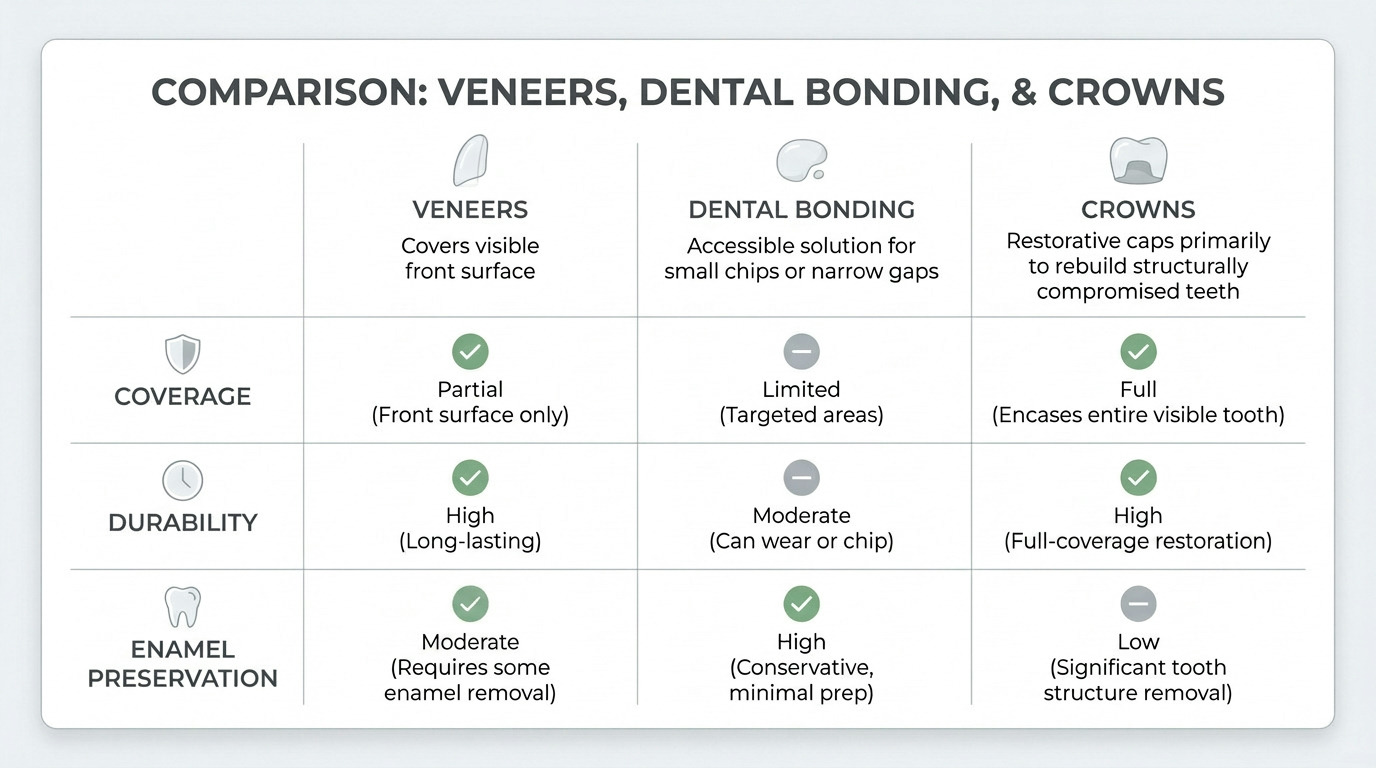
While ceramic restorations cover the visible front surface of teeth, Dental Bonding applies composite resin directly to repair localized flaws, and Dental Crowns encase the entire tooth structure. Veneers offer an ideal middle ground, preserving more natural tooth structure than full crowns while providing greater durability and stain resistance than composite bonding.

Direct composite bonding serves as an accessible, conservative solution for small chips or narrow gaps. However, composite resin is porous, meaning it gradually absorbs pigments from food and beverages, often requiring repolishing or replacement sooner than ceramic alternatives. Bonding is an excellent choice for targeted spot repairs, whereas porcelain veneers are better suited to changing the look of the whole smile.

In contrast, full-coverage crowns are restorative caps engineered primarily to rebuild structurally compromised, fractured, or root-canal-treated teeth. Fabricating a crown requires reshaping the entire circumference of the tooth. For healthy front teeth displaying primarily cosmetic imperfections, thin ceramic veneers represent a far more conservative, enamel-preserving procedure that achieves radiant aesthetics while retaining foundational tooth structure.

A dental comparison table contrasts veneers, bonding, and crowns across coverage, durability, and enamel preservation.

Schedule Your Veneer Consultation Today

Take the first step toward transforming your smile with confidence. Contact the welcoming team at Muldoon Dental Arts in Anchorage to schedule your comprehensive cosmetic consultation with Dr. Chad Curtis today.

Welcoming dental office at Muldoon Dental Arts

How Long Do Dental Veneers Last?

Dental veneers can provide durable performance for many years when supported by consistent oral hygiene and regular preventive cleanings. While veneers are not indestructible and will eventually require replacement, practicing mindful dietary habits and wearing protective night guards helps maximize their structural lifespan and cosmetic brilliance.

Dr. Chad Curtis emphasizes that the biological health beneath your restorations determines their ongoing stability. Even though ceramic cannot decay, the underlying tooth structure and surrounding gum tissue remain vulnerable to plaque accumulation and bacterial infection. Maintaining disciplined daily habits protects both your teeth and your restorative investment.

Daily Practices for Longevity

  • Consistent brushing and flossing: Brushing twice daily with non-abrasive toothpaste and flossing every day helps prevent decay along the edges of your veneers.
  • Protective night appliances: Wearing custom Mouthguards & Night Guards safeguards restorations against damaging forces caused by nocturnal clenching or grinding.
  • Mindful biting choices: Avoiding habits like chewing ice, opening plastic packaging with your teeth, or biting unpopped popcorn kernels helps prevent unnecessary chipping or shearing forces.
  • Routine dental cleanings: Scheduling professional exams every six months allows our hygiene team to monitor marginal integrity and polish ceramic surfaces safely.
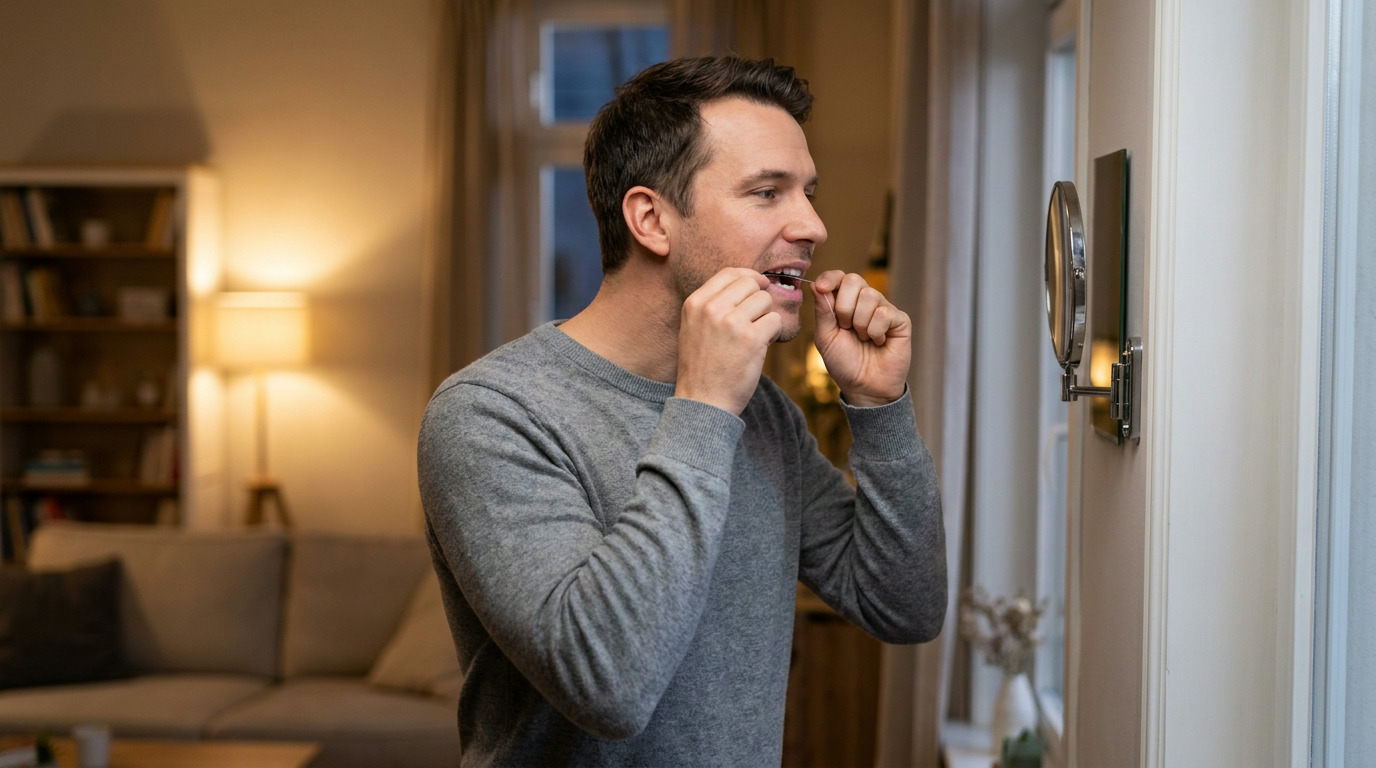
A patient wearing a grey long-sleeved sweater flosses his teeth while looking into a wall-mounted mirror in a warmly lit living room.

Who Is a Good Candidate for Dental Veneers?

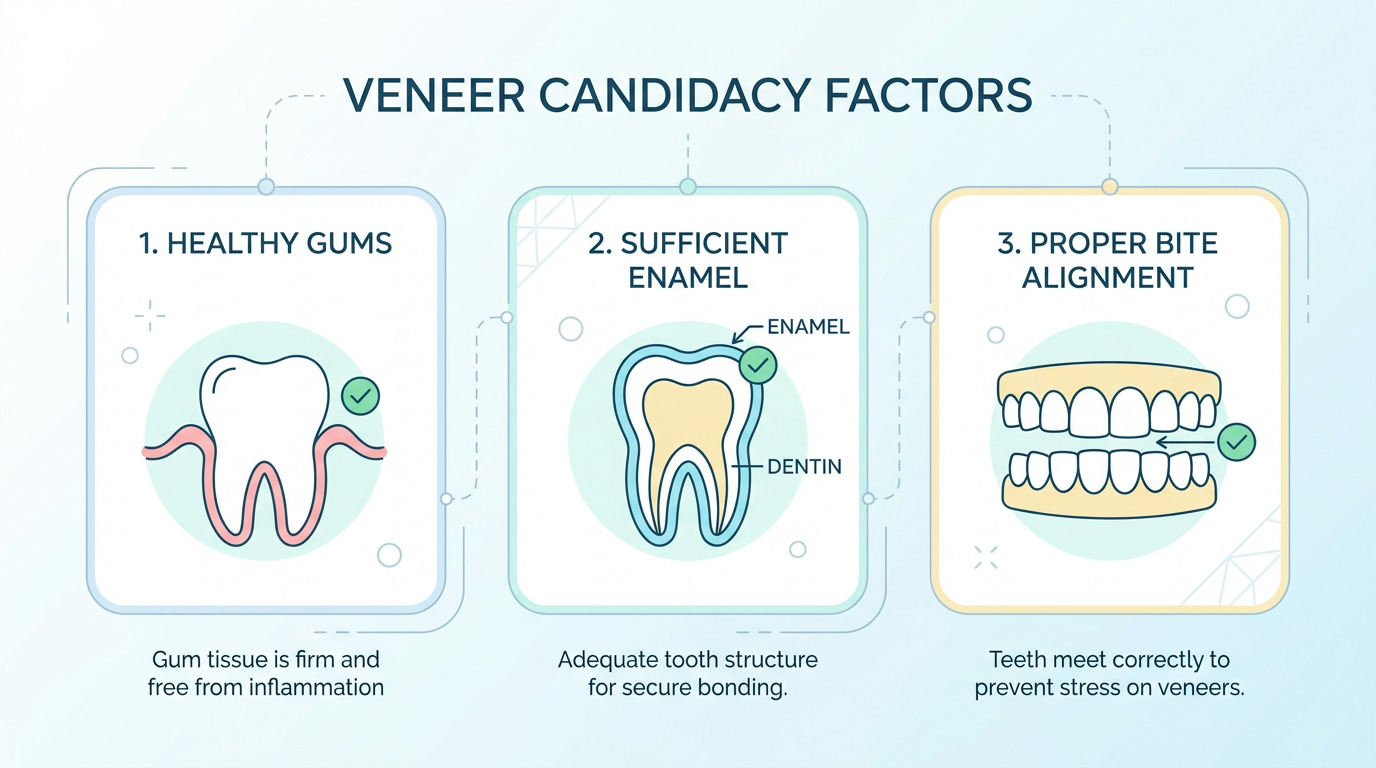
Ideal candidates for dental veneers possess healthy gums, structurally sound teeth, adequate remaining enamel for bonding, and reasonable bite alignment. Patients seeking to address intrinsic discoloration, chipped edges, minor gaps, or slightly uneven contours can achieve dramatic aesthetic improvements, provided active oral disease is treated first.

Sufficient healthy enamel is necessary because dental adhesives bond far more securely to enamel than to underlying dentin. If an individual experiences severe tooth wear, heavy crowding, or significant malocclusion, alternative therapies like clear aligners may be recommended before considering aesthetic restorations. Dr. Chad Curtis thoroughly evaluates bite patterns to help make sure chewing forces won't place undue strain on new veneers.

Furthermore, active issues such as untreated cavities or periodontal inflammation must be fully resolved beforehand. Placing restorations over diseased tissues compromises longevity and reliable adhesion. During a comprehensive evaluation at our Anchorage office, we complete Dental Exams & X-Rays to confirm your mouth is healthy, functional, and ready for aesthetic enhancement.

An infographic displays three veneer candidacy factors with icons depicting healthy gums, sufficient enamel on a tooth cross-section, and proper bite alignment.

What to Expect During the Procedure

The veneer treatment process typically spans two to three appointments, beginning with planning and minor enamel preparation, followed by custom fabrication, and concluding with final adhesive bonding. High-strength resin cements bond the ceramic securely to your natural tooth surface for a seamless, functional result.

Our team prioritizes patient comfort throughout every stage of smile design. Modern techniques allow for conservative enamel shaping, often removing only a fraction of a millimeter to ensure the finished restorations sit flush against your natural gumline.

Steps in the Smile Transformation

  • Comprehensive diagnostic planning: Dr. Chad Curtis discusses your aesthetic vision, takes precise records, and helps design the shape, width, and shade of your future teeth.
  • Enamel preparation and impressions: A minimal outer layer of enamel is carefully shaped under local anesthetic, after which accurate impressions capture your teeth for the dental laboratory.
  • Temporary restorations: Natural-looking provisional restorations are placed over your teeth to protect them and let you test drive your new look while the dental laboratory crafts your final porcelain veneers.
  • Final bonding and evaluation: After trying in your final restorations to verify fit and shade, Dr. Chad Curtis chemically bonds them in place using durable resin cements before fine-tuning your bite.
A light purple rounded callout box reads Planning, preparation and final bonding, with small tooth icons and leaf decorations.

Planning Your Smile Care in Anchorage

Investing in your smile is a significant personal choice that combines artistic vision, advanced dental materials, and meticulous clinical technique. When exploring veneers in Anchorage, working with an attentive dental provider helps your restorations look harmonious and function comfortably for everyday life.

At Muldoon Dental Arts, Dr. Chad Curtis takes a comprehensive approach to cosmetic care, evaluating your facial aesthetics, bite mechanics, and oral wellness before shaping any treatment plan. Our team believes that transparent discussions regarding treatment stages, laboratory artistry, and preventive maintenance empower you to choose the path that best supports your goals.

Whether you wish to restore worn teeth, address troublesome spacing, or mask stubborn discoloration that resists whitening, custom ceramic restorations can offer natural-looking, lasting aesthetics. If you have been searching online for trusted veneers near me, we welcome you to visit our Anchorage office for a personalized assessment. Together, we can design a radiant, natural-looking smile that elevates your daily confidence.

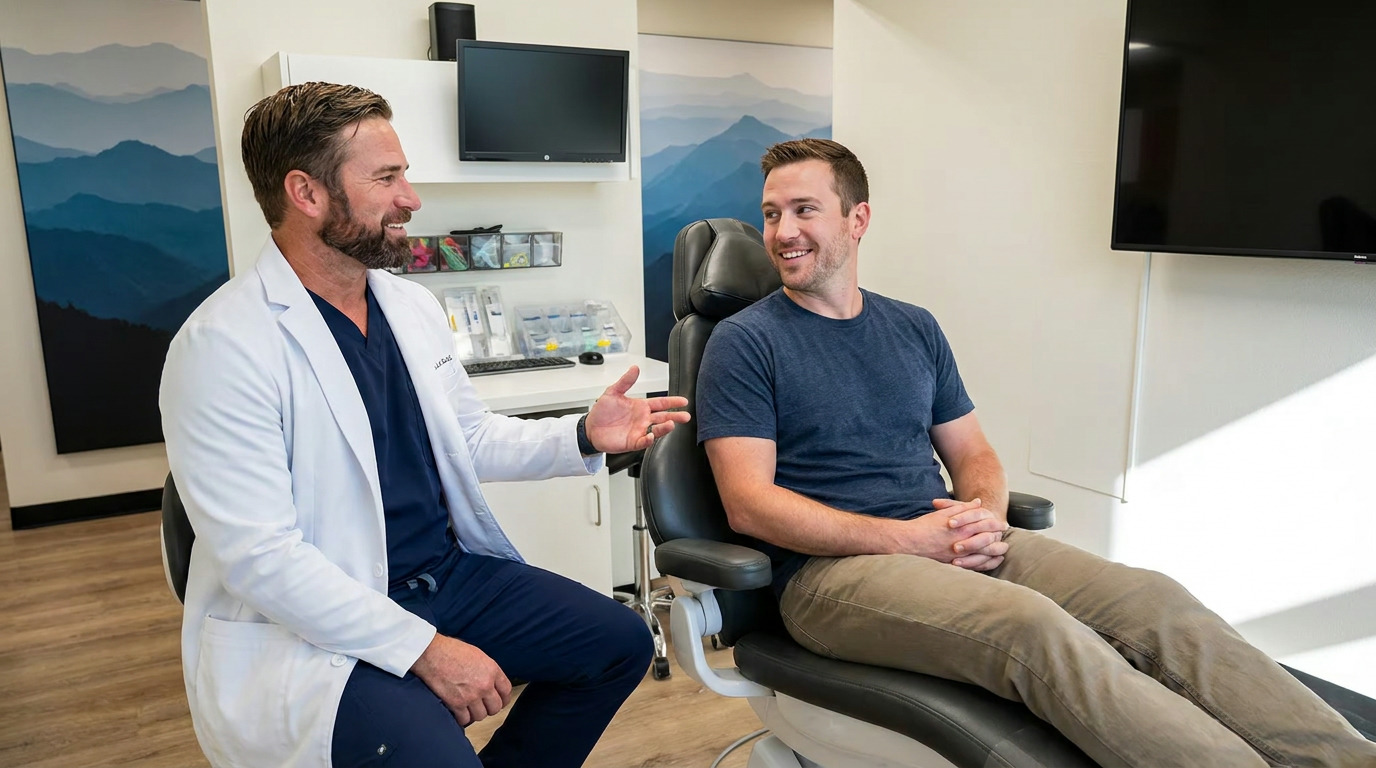
Dr. Chad Curtis gestures and smiles while talking to a patient seated comfortably in a dental chair in a bright treatment room.
Categories:

Frequently Asked Questions

1. What factors most affect veneers cost?
Total veneers cost is primarily determined by how many teeth require treatment, preparatory procedures, case complexity, and custom ceramic laboratory artistry. Geographic factors and the clinician's restorative experience also play a role in personalized estimates.

2. Are porcelain veneers stain resistant?
Yes, high-grade dental porcelain is non-porous and glassy, making it remarkably resistant to staining from coffee, tea, and tobacco. Porcelain veneers generally hold their shade better than natural enamel or composite bonding.

3. Does getting veneers hurt during treatment?
Local anesthesia is used to numb the area during tooth preparation. Some patients notice mild, temporary sensitivity afterward. If you feel anxious about treatment, ask about the sedation options available at Muldoon Dental Arts.

4. How many veneers do most people get?
Many individuals choose six to eight restorations across their upper visible teeth to ensure a balanced, symmetrical smile, though single-tooth repairs or comprehensive sets are also common depending on goals.

5. Can veneers fall off or chip?
While dental adhesives create a powerful bond, restorations can chip or dislodge if subjected to extreme forces, such as teeth grinding, chewing hard objects, or untreated bite trauma.

6. Will dental insurance cover veneers cost?
Dental insurance plans generally treat cosmetic restorations as elective, meaning they rarely cover aesthetic veneers. If a veneer restores structural damage from injury or decay, partial benefits may occasionally apply.

7. How do I maintain my veneers daily?
Care for your restorations by brushing twice daily with non-abrasive toothpaste, flossing daily, wearing a night guard if you clench your jaw, and scheduling routine cleanings every six months.

8. How much enamel is removed for veneers?
The procedure involves conservative enamel contouring, typically removing only a fraction of a millimeter from the front surface to ensure the restoration sits flush with adjacent teeth and gums.

9. Are veneers reversible once placed?
Because a minor layer of natural enamel is contoured to help support proper placement and aesthetics, the process is not considered reversible. Treated teeth will always require a restoration.

10. What is the difference between bonding and veneers?
Composite bonding involves applying malleable resin directly to the tooth chairside, whereas ceramic restorations are custom-crafted laboratory shells that offer superior longevity, strength, and stain resistance over time.

Connect With Us

Your Appointment Starts Here

Questions about a visit, treatment options, or insurance? Send us a note and our team will get back to you within one business day.

CALL US ANYTIME

(907) 865-8488

REACH US DURING

Mon-Thu: 08:00 AM – 5:00 PM

Fri: 08:00 AM – 2:00 PM

Sat: Closed

Sun: Closed

Questions About Your Coverage?
Book Your Visit

Thank you for booking your appointment!

We’ve received your request and will contact you soon to confirm the details. We look forward to seeing you at Muldoon Dental Arts.

Oops! Something went wrong while submitting the form.

Stay Informed with Expert Insights & Tips About {{p}}Dental Care{{/p}}

LATEST BLOG POSTS
VIEW ALL BLOGS
10.27.2026

Are Dental Implants Right for You?

Dental implants restore chewing strength and preserve natural jawbone volume to deliver a lifelike smile solution designed to be a permanent fixture in your mouth.

10.27.2026
A cross-section dental model shows a threaded titanium implant post embedded in bone beneath pink gums, supporting a lifelike ceramic crown beside natural teeth.
READ MORE
9.22.2026

The True Value of Professional Dental Cleanings

Regular professional dental cleanings are crucial for preventing cavities and gum disease, ensuring fresh breath, and maintaining overall oral and systemic health.

9.22.2026
Paige sits on a wooden park bench in a pink blouse, holding a green apple to her mouth and taking a bite, with trees and sunlight in the background.
READ MORE
9.22.2026

Muldoon Dental Arts' Guide to Dental Exams & X-Rays

Regular dental exams and X-rays are critical for maintaining oral health, detecting issues early, and preventing complex problems, with Muldoon Dental Arts guiding patients through personalized care.

9.22.2026
Daniel, wearing a navy t-shirt, sits in a softly lit bedroom, holding a clear aligner tray and a silver pouch, with another aligner, a glass of water, and a lamp on the wooden nightstand beside him.
READ MORE

Stay Informed with Expert Insights & Tips
About {{p}}Dental Care{{/p}}

LATEST BLOG POSTS
VIEW ALL BLOGS
10.27.2026

Are Dental Implants Right for You?

Dental implants restore chewing strength and preserve natural jawbone volume to deliver a lifelike smile solution designed to be a permanent fixture in your mouth.

10.27.2026
A cross-section dental model shows a threaded titanium implant post embedded in bone beneath pink gums, supporting a lifelike ceramic crown beside natural teeth.
READ MORE
9.22.2026

The True Value of Professional Dental Cleanings

Regular professional dental cleanings are crucial for preventing cavities and gum disease, ensuring fresh breath, and maintaining overall oral and systemic health.

9.22.2026
Paige sits on a wooden park bench in a pink blouse, holding a green apple to her mouth and taking a bite, with trees and sunlight in the background.
READ MORE