Back to Blogs

Are Dental Implants Right for You?

Dental implants restore chewing strength and preserve natural jawbone volume to deliver a lifelike smile solution designed to be a permanent fixture in your mouth.

October 27, 2026
•
5 min read
A cross-section dental model shows a threaded titanium implant post embedded in bone beneath pink gums, supporting a lifelike ceramic crown beside natural teeth.
Back to Blogs
A cross-section dental model shows a threaded titanium implant post embedded in bone beneath pink gums, supporting a lifelike ceramic crown beside natural teeth.

Are Dental Implants Right for You?

Dental implants restore chewing strength and preserve natural jawbone volume to deliver a lifelike smile solution designed to be a permanent fixture in your mouth.

October 27, 2026
•
5 min read

Deciding If Dental Implants Suit Your Needs

Dental implants are ideal for individuals missing one or more teeth who possess healthy gums and sufficient jawbone support. Adults seeking a permanent, lifelike tooth replacement that restores chewing power and prevents facial bone deterioration make excellent candidates. A thorough clinical evaluation determines whether your mouth can successfully support these titanium foundations.

More patients in Anchorage are asking whether modern implant solutions fit their lifestyle and long-term oral health goals. Rather than settling for removable appliances, people increasingly look for restorations that look, feel, and function just like natural teeth. At Muldoon Dental Arts, Dr. Alex Anderson examines your overall dental condition to verify whether you can move forward with treatment right away.

Making the right choice involves evaluating bone volume, gum health, medical history, and daily habits. Even if you have dealt with missing teeth for years, targeted restorative treatments can often rebuild your oral foundation and prepare you for successful implant placement.

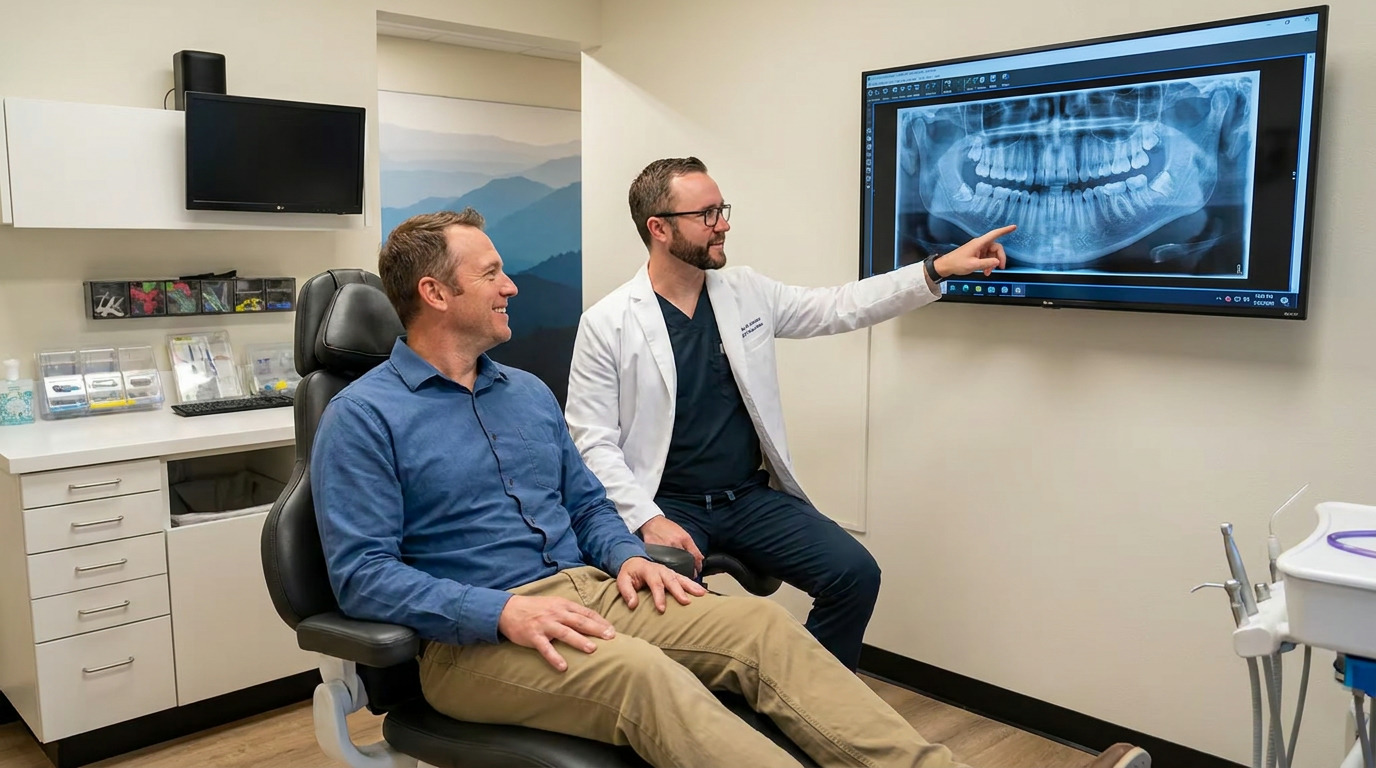
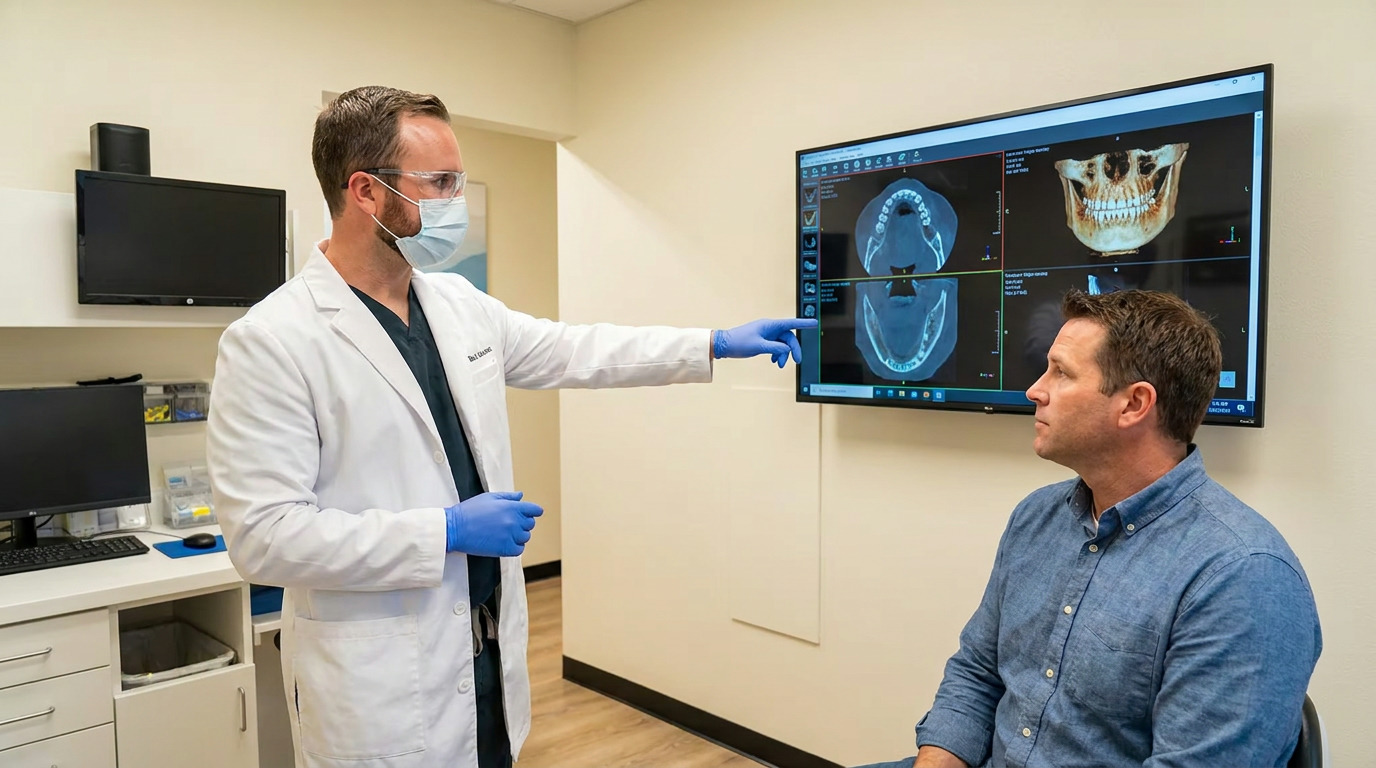
Dr. Alex Anderson in a white coat points at a panoramic dental X-ray on a wall monitor while speaking with Jacob seated in an exam chair.

Who Is an Ideal Candidate for Implants?

An ideal candidate for dental implants has good general health, healthy gum tissue free from active disease, and adequate bone density to anchor the post securely. Non-smokers and individuals without uncontrolled chronic conditions heal fastest, though many patients with prior bone loss can still qualify after preliminary restorative care.

During a comprehensive consultation, Dr. Alex Anderson assesses your mouth using modern imaging to verify if your jaw can anchor the new root. A successful placement relies heavily on your body's natural ability to fuse bone with titanium through predictable osseointegration.

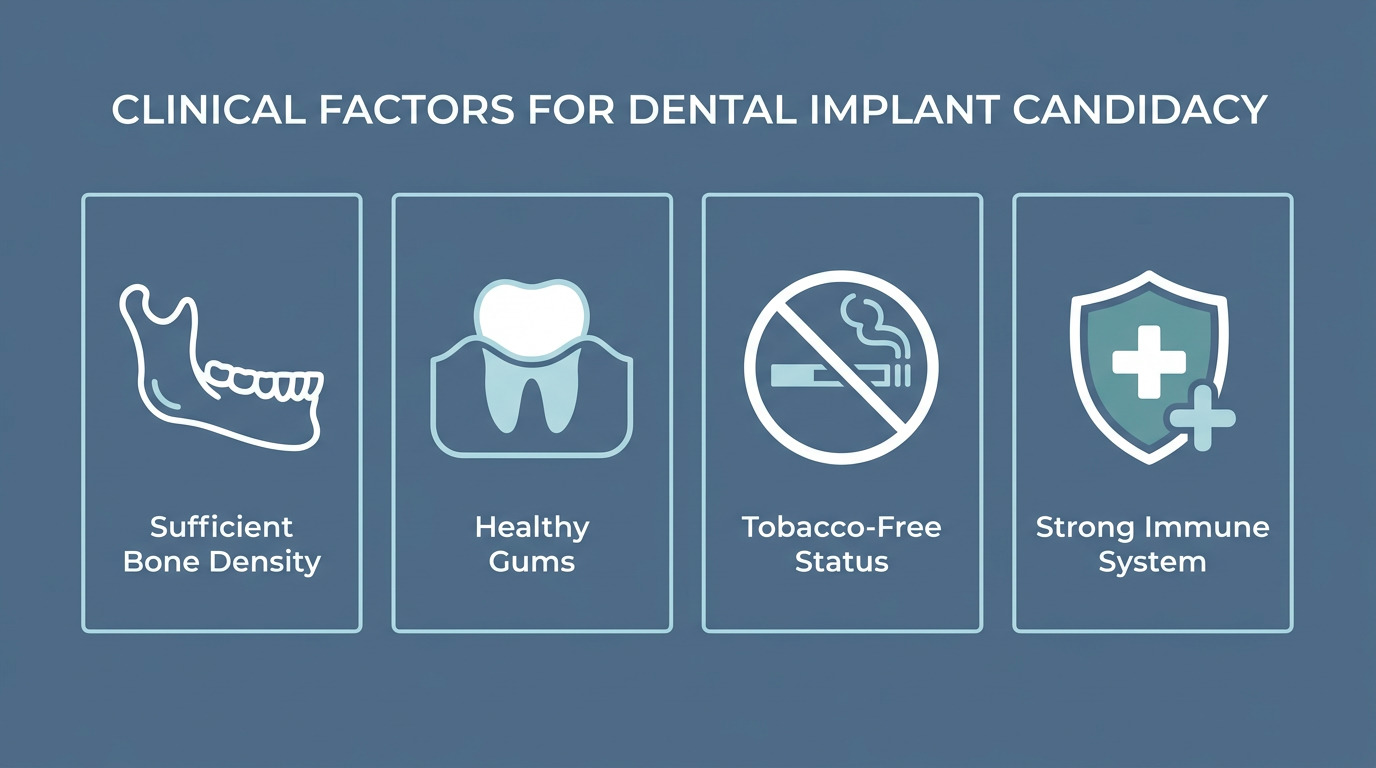
Key Factors That Influence Candidacy

  • Sufficient bone density: A strong jawbone creates the solid foundation required to hold the prosthetic tooth firmly under daily chewing forces.
  • Healthy periodontal tissues: Active gum disease can jeopardize treatment, making preliminary periodontal treatment necessary before surgical placement begins.
  • Tobacco-free: Tobacco use slows blood flow and tissue healing, so stopping smoking dramatically improves your chances of long-term clinical success.
  • Good overall health: Well-managed systemic conditions ensure your immune system can handle healing smoothly following minor oral surgery.
Infographic displaying four dental implant factors with icons for bone density, healthy gums, tobacco-free status, and a strong immune system on a blue background.

What Are the Top Tooth Replacement Options?

Modern tooth replacement options include single-tooth implants, fixed dental bridges, conventional dentures, and comprehensive full-arch implant solutions. Each choice varies in longevity, stability, jawbone preservation, and daily maintenance requirements, making personalized clinical guidance essential for finding the best long-term match for your unique smile.

Selecting the proper tooth replacement depends on your cosmetic desires, lifestyle preferences, and the number of teeth missing. Working alongside Dr. Chad Curtis, Dr. Alex Anderson outlines all viable restorative pathways so you can make an informed, confident decision for your smile.

Comparing Modern Replacement Choices

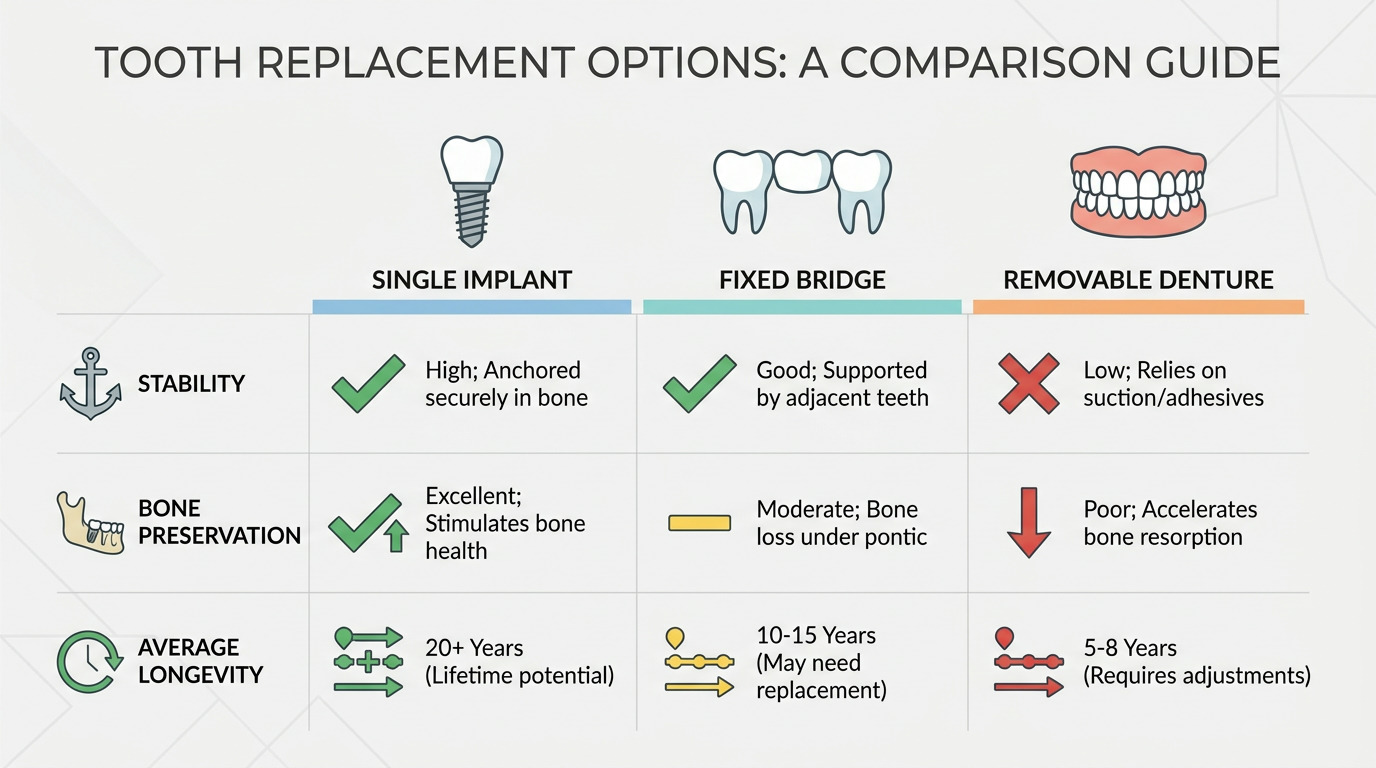
  • Dental implants: Replace both root and crown, stimulating the jawbone to preserve natural facial structure, and are designed to be a permanent fixture in your mouth.
  • Fixed dental bridges: Bridge gaps by cementing connected crowns over adjacent natural teeth, providing stable chewing without requiring bone surgery.
  • Full-arch replacements: Advanced treatments like All-on-X dental implants secure an entire arch of teeth onto strategically positioned posts.
  • Traditional removable dentures: Offer an accessible way to replace multiple missing teeth, though they rest solely on gum tissue and lack bone-anchored stability.
An infographic compares single dental implants, fixed bridges, and removable dentures based on stability, bone preservation, and average longevity.

Dental Implant vs Bridge: Which Is Better?

A dental implant is generally superior for preserving healthy teeth and jawbone, while a bridge offers a faster, non-surgical turnaround. Implants replace the tooth root independently, avoiding the need to shave down adjacent natural enamel, whereas bridges rely directly on neighboring teeth for mechanical support.

When patients compare an implant vs bridge, biological preservation often becomes the deciding factor. To place traditional dental bridges, a dentist must permanently grind down healthy adjacent enamel to anchor supporting crowns. Implants stand entirely on their own, allowing you to floss normally between teeth while protecting neighboring structures from undue strain.

Longevity also sets these two treatments apart. A conventional bridge usually needs replacement after ten to fifteen years due to recurring decay or cement wear under the crowns. Conversely, the average lifespan of a dental implant is anywhere from 10-30 years. This means that most likely, depending on your age when you get an implant, it will last for the rest of your life.

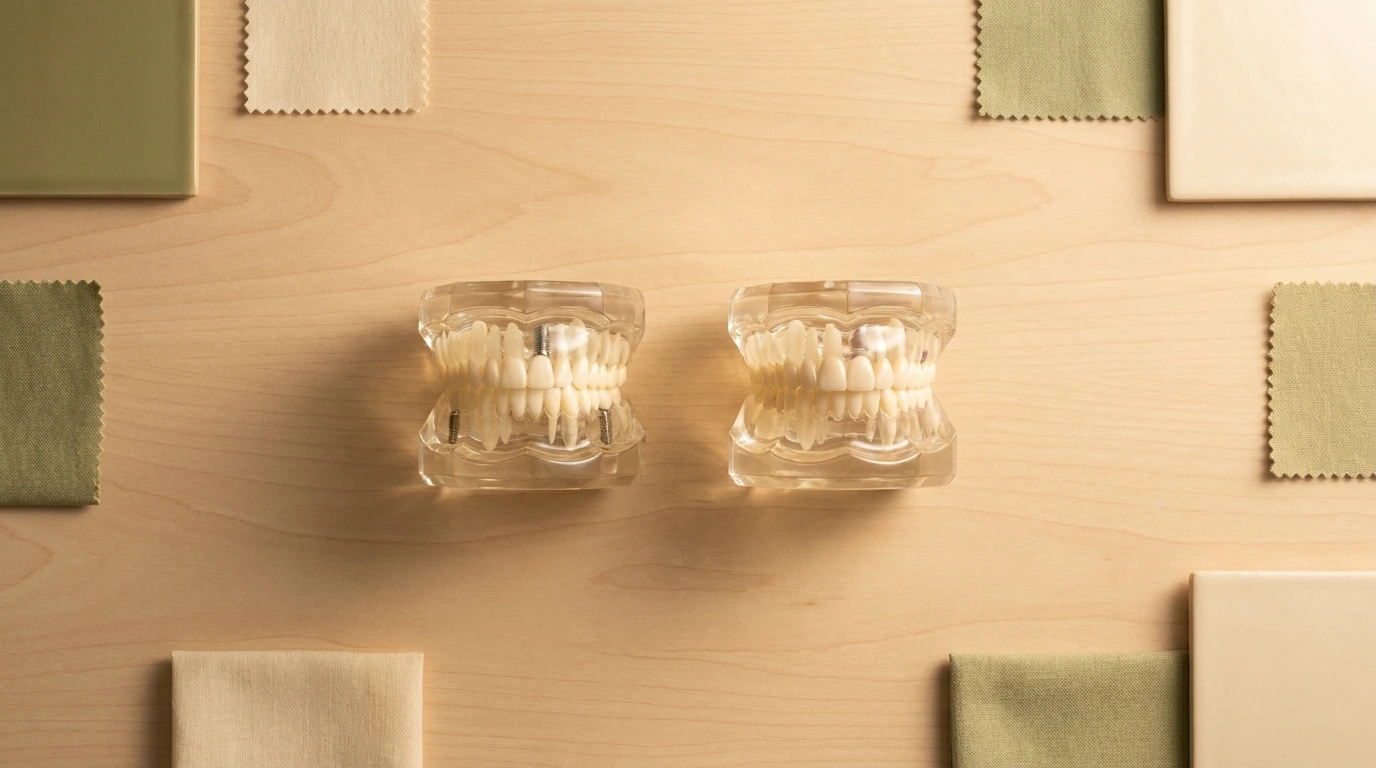
Two transparent dental study models rest on a light wood surface, framed by muted green and beige fabric swatches and square tiles.

Schedule Your Implant Consultation in Anchorage

Missing teeth do not have to hold back your smile, chewing comfort, or self-confidence. Schedule a personalized consultation with Dr. Alex Anderson at Muldoon Dental Arts to discover whether implants are the ideal choice for your oral health goals. Our compassionate team takes the time to answer your questions and design a care plan tailored to your needs.

Exterior of the Muldoon Dental Arts office in Anchorage, AK

What Is the Dental Implant Procedure Timeline?

The standard implant procedure takes between three and nine months from initial consultation to final crown placement. This timeline accounts for planning, potential bone grafting, post placement, biological bone integration, and final restoration delivery, ensuring your new tooth achieves permanent stability before handling normal chewing pressures.

Understanding the phases of treatment removes uncertainty and lets you plan your schedule comfortably. Dr. Alex Anderson guides you through each milestone, monitoring healing progress with careful examinations to ensure optimal tissue health.

Step-by-Step Treatment Milestones

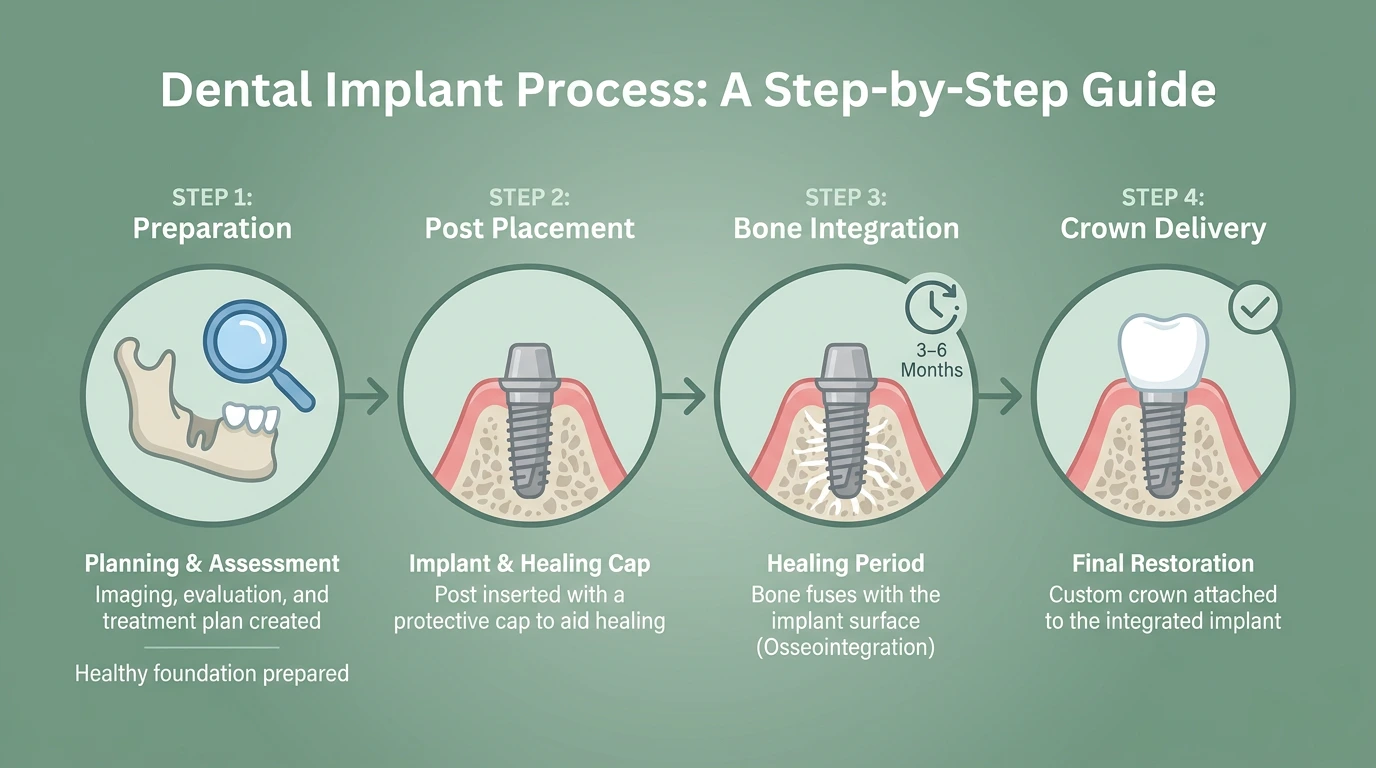
  • Consultation and imaging: Detailed clinical diagnostics map your nerve pathways, sinus position, and available bone depth for precise digital planning.
  • Foundation preparation: If you need preliminary bone augmentation or gentle tooth extractions, healing may require several weeks before post placement.
  • Implant post placement: The biocompatible titanium post is gently set into the jawbone using comfortable sedation dentistry options.
  • Bone integration period: The jawbone fuses with the implant post over three to six months, creating an exceptionally solid root replacement.
  • Restoration attachment: A custom abutment and lifelike crown are permanently secured to complete your functional and aesthetic smile transformation.
A four-step dental implant journey infographic illustrates the stages of preparation, post placement, bone integration, and final crown delivery on a sage-green background.

How Bone Density Affects Implant Success

Adequate bone density is vital because the titanium implant post requires sturdy surrounding bone tissue to lock into place securely. If a missing tooth has caused bone resorption over time, preliminary bone grafting can rebuild sufficient ridge height and width to ensure lasting stability for the replacement tooth.

When a natural tooth goes missing, the jawbone beneath it loses the chewing stimulation needed to maintain its volume. Within the first year following tooth loss, the surrounding bone can resorb significantly, altering facial proportions and shrinking the ridge. Fortunately, advanced restorative techniques can rebuild depleted bone tissue, meaning past bone loss does not automatically disqualify you from getting implants.

During your visit in Anchorage, Dr. Alex Anderson evaluates your bone dimensions to decide if a supplemental graft is beneficial. Preparing the jaw with adequate structural support minimizes complications and delivers a dependable foundation for lifetime function.

Alex, wearing a white lab coat, mask, and blue gloves, points to 3D dental scans on a wall-mounted monitor while Jacob listens in a bright consultation room.

What Factors Influence Dental Implant Costs?

Dental implant costs depend on preparatory treatments, the number of teeth being replaced, surgical complexity, and choice of restoration materials. Preliminary procedures like extractions or grafting, along with your sedation choice, also shape the overall investment needed to rebuild a healthy, complete smile.

Because every mouth presents unique anatomical needs, treatment planning is customized for each patient rather than handled with one-size-fits-all pricing. Dr. Anderson and our team prioritize transparent treatment plans so you know exactly what your care involves before moving forward.

What Affects the Cost of Implants

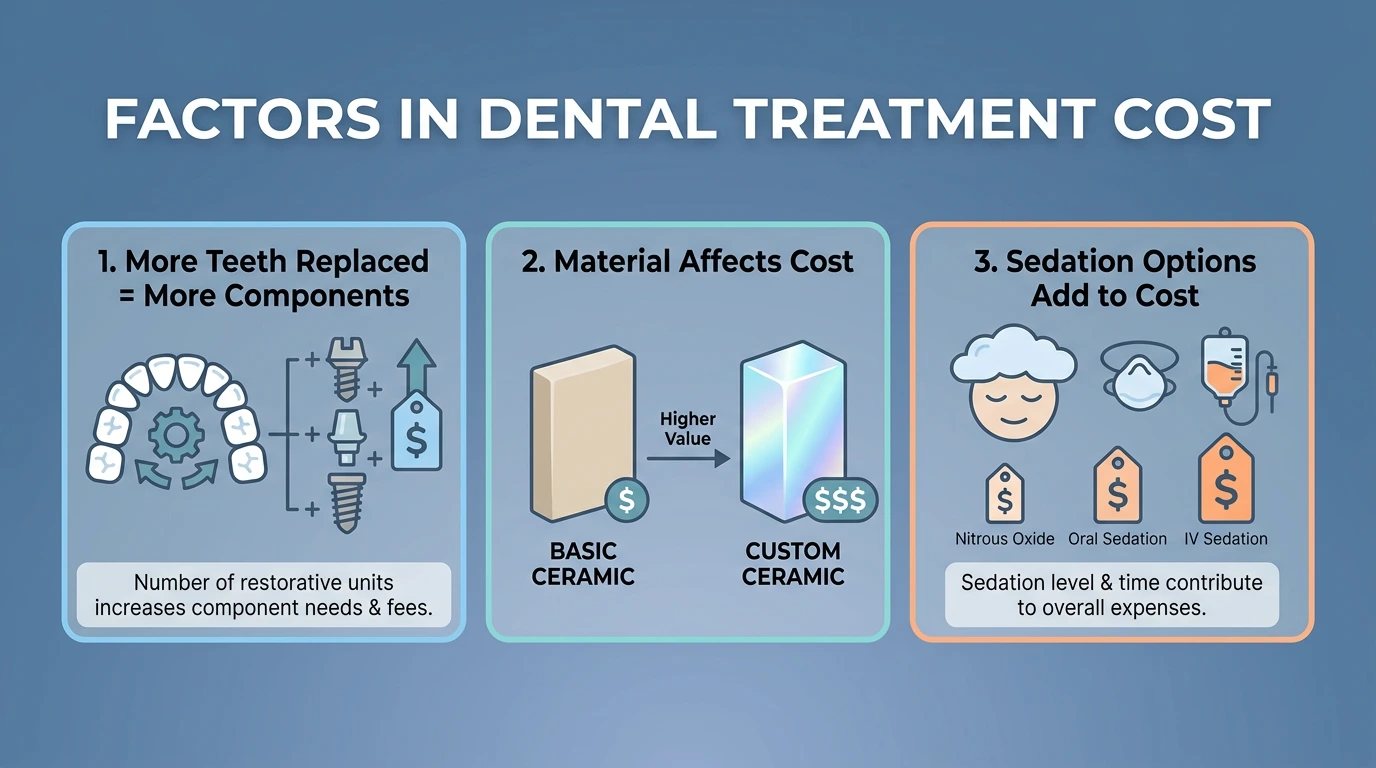
  • Preliminary oral procedures: Necessary preliminary treatments like bone grafting, sinus elevation, or site-clearing extractions will adjust the overall scope of care.
  • Number of teeth replaced: Single-tooth restorations require fewer components than multi-unit bridges or comprehensive full-mouth reconstruction plans.
  • Restorative materials selected: Custom ceramic crowns, including zirconia, look natural and resist chipping.
  • Comfort and sedation choices: Tailored relaxation options during minor oral surgery help anxious patients stay completely relaxed throughout their procedure.
Three-panel graphic outlines factors in dental treatment cost, highlighting replaced teeth and implant components, basic versus custom ceramic materials, and sedation options.

What This Means for Your Long-Term Smile

Choosing how to replace missing teeth is an important medical and aesthetic decision that impacts your oral health for decades. While alternatives like traditional bridges and removable dentures offer shorter initial timelines, dentures often need ongoing adjustments, and neither prevents bone loss where the tooth is missing. Implants protect your remaining natural teeth from shifting and preserve the natural shape of your lower face.

Investing in your smile restores full chewing strength so you can enjoy your favorite meals without pain, clicking, or dietary restrictions. Patients discover that brushing and flossing around an implant is just as simple as caring for natural teeth, eliminating the complex cleaning rituals required by traditional prosthetics.

At Muldoon Dental Arts, Dr. Alex Anderson is dedicated to helping patients throughout the Anchorage community regain confidence and comfortable function. A comprehensive dental exam and frank discussion will clarify your candidacy, timeline, and personalized restorative options so you can achieve lasting oral wellness and a dependable smile.

A man in a blue shirt and a woman in a white blouse sit on a couch near a window, smiling and talking, with text reading Permanent Stability for Lifelong Function.
Categories:

Frequently Asked Questions

1. Am I too old to get dental implants?
Age is rarely a barrier for dental implants. As long as you have good general health, healthy gums, and sufficient bone structure to support healing, you can successfully receive implants well into your senior years.

2. How painful is the dental implant procedure?
Most patients report minimal discomfort during and after the procedure. Local anesthesia numbs the treatment area completely, and comfortable sedation options keep you calm. Any mild soreness afterward is easily managed with routine pain relievers.

3. How long do dental implants typically last?
The average lifespan of a dental implant is anywhere from 10-30 years. This means that most likely, depending on your age when you get an implant, it will last for the rest of your life. Generally speaking, a dental implant is designed to be a permanent fixture in your mouth. In fact, studies have reported a 90 to 95 percent success rate of dental implants over a period of 10 years. Diligent brushing, regular flossing, and routine dental visits help protect it. The custom crown attached to the implant typically lasts fifteen to twenty years before normal wear suggests replacement.

4. Can smokers safely qualify for dental implants?
Smokers can receive dental implants, but tobacco use increases the risk of complications and implant failure by slowing blood flow. Pausing smoking before surgery and throughout recovery significantly improves bone integration and healing outcomes.

5. What happens if I lack sufficient jawbone density?
If you lack bone density, preliminary bone grafting can rebuild the ridge before implant placement. This routine preparatory treatment restores height and width, providing a stable foundation to support the implant post securely.

6. How do I clean and maintain my dental implants?
Caring for dental implants matches natural oral hygiene. Brush twice daily with a soft-bristled brush, floss daily around your restorations, and visit your dentist regularly for professional checkups and cleanings.

7. Can a dental implant replace multiple missing teeth?
Yes. A single post can replace one tooth, while two or more implants can anchor a multi-unit bridge or full-arch restoration without requiring a separate post for every missing tooth.

8. How soon can I return to work after implant surgery?
Most patients resume normal work and light daily activities within one to two days following implant placement. Minor swelling or tenderness subsides quickly with standard rest and recommended care.

9. What causes a dental implant to fail?
Implant failure is uncommon but can occur if severe gum infection develops or if the bone fails to fuse properly with the titanium post. Uncontrolled systemic illnesses and poor hygiene increase this risk.

10. Are dental implants covered by dental insurance?
Many insurance policies offer partial coverage for restorative components, extractions, or crowns, even if the surgical post itself has limited benefits. Check with your insurance provider to review your specific benefits.

Connect With Us

Your Appointment Starts Here

Questions about a visit, treatment options, or insurance? Send us a note and our team will get back to you within one business day.

CALL US ANYTIME

(907) 865-8488

REACH US DURING

Mon-Thu: 08:00 AM – 5:00 PM

Fri: 08:00 AM – 2:00 PM

Sat: Closed

Sun: Closed

Questions About Your Coverage?
Book Your Visit

Thank you for booking your appointment!

We’ve received your request and will contact you soon to confirm the details. We look forward to seeing you at Muldoon Dental Arts.

Oops! Something went wrong while submitting the form.

Stay Informed with Expert Insights & Tips About {{p}}Dental Care{{/p}}

LATEST BLOG POSTS
VIEW ALL BLOGS
9.22.2026

The True Value of Professional Dental Cleanings

Regular professional dental cleanings are crucial for preventing cavities and gum disease, ensuring fresh breath, and maintaining overall oral and systemic health.

9.22.2026
Paige sits on a wooden park bench in a pink blouse, holding a green apple to her mouth and taking a bite, with trees and sunlight in the background.
READ MORE
9.22.2026

Muldoon Dental Arts' Guide to Dental Exams & X-Rays

Regular dental exams and X-rays are critical for maintaining oral health, detecting issues early, and preventing complex problems, with Muldoon Dental Arts guiding patients through personalized care.

9.22.2026
Daniel, wearing a navy t-shirt, sits in a softly lit bedroom, holding a clear aligner tray and a silver pouch, with another aligner, a glass of water, and a lamp on the wooden nightstand beside him.
READ MORE
9.22.2026

General Dentistry Your Oral Health Timeline Explained

Define your oral health timeline with Muldoon Dental Arts for lasting wellness, addressing concerns like persistent aches and cavities.

9.22.2026
Dylan sits at a cafe window seat, holding a mug and biting into a croissant, with a street and buildings visible outside.
READ MORE

Stay Informed with Expert Insights & Tips
About {{p}}Dental Care{{/p}}

LATEST BLOG POSTS
VIEW ALL BLOGS
9.22.2026

The True Value of Professional Dental Cleanings

Regular professional dental cleanings are crucial for preventing cavities and gum disease, ensuring fresh breath, and maintaining overall oral and systemic health.

9.22.2026
Paige sits on a wooden park bench in a pink blouse, holding a green apple to her mouth and taking a bite, with trees and sunlight in the background.
READ MORE
9.22.2026

Muldoon Dental Arts' Guide to Dental Exams & X-Rays

Regular dental exams and X-rays are critical for maintaining oral health, detecting issues early, and preventing complex problems, with Muldoon Dental Arts guiding patients through personalized care.

9.22.2026
Daniel, wearing a navy t-shirt, sits in a softly lit bedroom, holding a clear aligner tray and a silver pouch, with another aligner, a glass of water, and a lamp on the wooden nightstand beside him.
READ MORE